
Feedback That Works
Lesson 6
Frequent and timely formative feedback is critical for building strong teams and helping team members grow in their skills and careers.
Giving constructive feedback in a way that doesn't make others defensive is much harder than it sounds. Feedback is important to help others understand both what's working and what's not working. Great feedback is also bi-directional, leaders giving feedback to team members and team members giving feedback to leaders, although styles and techniques may be slightly different depending on the direction.
Let's walk through the basics of giving valuable formative feedback in the video below.
Dont's
- Starts with a question
- Is mostly opinion
- Expresses a value judgement
- Gets defenses up
- Provides no specifics
- Mostly closed statements
- Includes a lot of emotion
- Delayed
- Mostly negative
- Focuses on the person
- Given in public
- Uses “should” or “should have”
Dos
- Makes assumptions
- Is objective or backed up by data and results
- Places no subjective good/bad judgement on the feedback
- Keeps recipient open to the feedback
- Provides specific examples, data, or results
- Open ended questions
- Removes emotion (delay or pause as appropriate)
- Timely (as close to event as possible)
- More positive than negative (totals)
- Focuses on the behavior
- Given in private
- Asks recipient about different courses of action
Receiving Feedback & Managing Up
Everyone likes to receive positive feedback, but receiving constructive feedback can be harder for people. Yet, the only way to improve is to identify and work on areas where we have weaknesses. In Stephen Covey's 7 Habits training, he often talks about continuous improvement and sharpening the saw. Feedback is one tool in the toolbox to help us do just that.
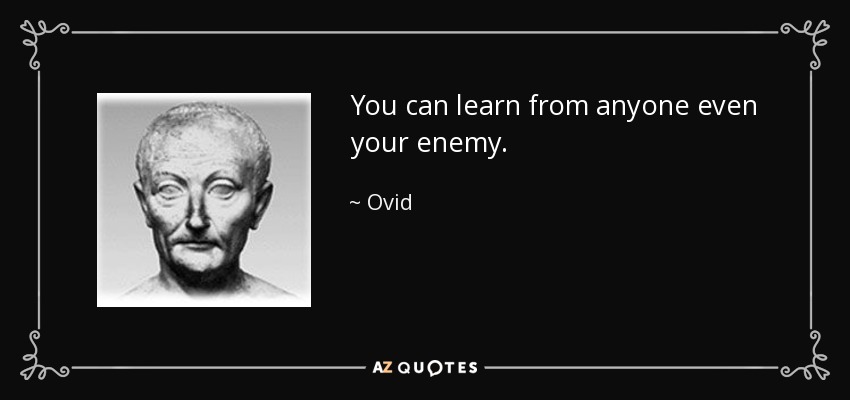
Obviously, the above image was chosen for a reason. Sometimes, we're not open to feedback and may view those providing it as someone who is being critical rather than working hard to support us on our growth journeys. Other times, we pre-emptively dismiss important learning opportunities based on our opinions, right or wrong, of others.
The fact is that you can and should learn from everyone. Sometimes you're learning what not to do, sometimes it's being open to learn even from people you don't like or agree with. Other times, you're learning from the best, people you enjoy learning from.
Not everyone is going to communicate in a way you may prefer, but working to learn from every situation and critically examine the pros and cons of feedback regardless of the source is an invaluable skill.
Always remember that others are on their own learning journeys as well. We have this training because it can be a struggle to give and receive feedback effectively. In a perfect world, everyone would be open to critical feedback as well as positive feedback and everyone would be great at delivering it. We do not live in a perfect world though and everyone will have different skill levels related to giving and receiving, so always keep that in mind as you engage in feedback conversations with others.
Through these trainings, the goal is to help people become better at both giving and receiving feedback in a variety of contexts and relationships.
