
Decision-making
Lesson 3
Decisions can be made with lots of forethought and planning, or executed on little more than a whim or intuition.
The best decisions are generally a mix of the two.
“Most decisions should probably be made with somewhere around 70% of the information you wish you had. If you wait for 90%, in most cases, you’re probably being slow.” - Jeff Bezos.
Careful decision-making is important, but consistent execution is more often what leads to success, as Bezos rightly points out. So we want a combination of intentional planning with a predilection towards action.
Intuition and gut feelings can sometimes work, but just as often, they lead us astray. Intuition or gut feeling is simply your unconscious brain's attempt to solve the problem. It takes in your experience in a certain area and then formulates an answer based on the data sets it has with experiences in that area. The problem is that such decision-making is a black box, just like many machine learning algorithms today. What data set is the unconscious brain using, does it have enough data, are the connetions it's making logical? While the unconscious mind can sometimes get it right, it's a very unreliable way to approach complex decisions.
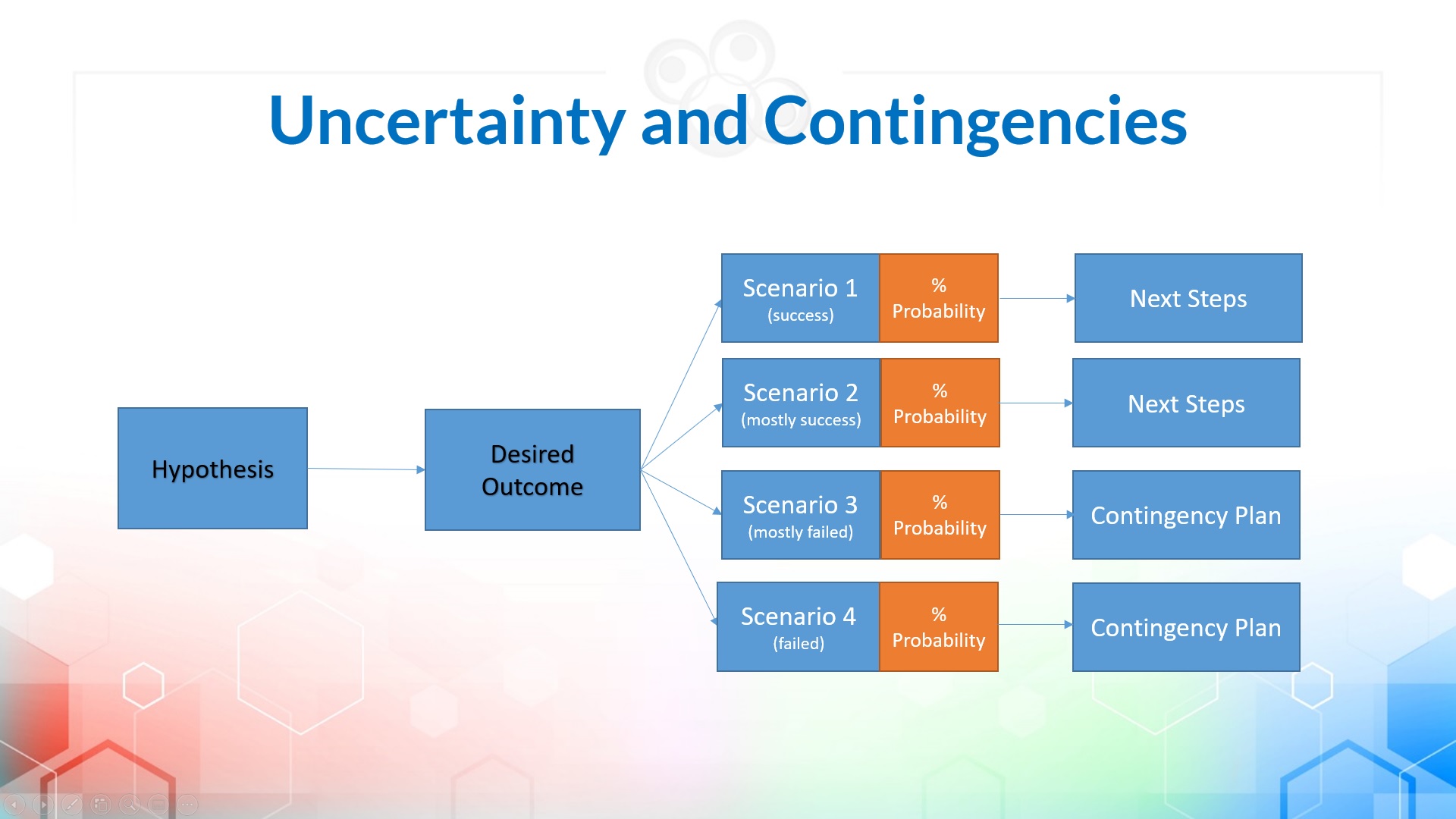
The most important parts of intentional decision-making are to avoid the ever-present cognitive biases, examine things from the perspective of probability not certainty, and have a consistent framework you use again and again.
List of Cognitive Biases
- We’ve always done it that way
- Confirmation bias
- Loss aversion
- Availability cascade/heuristic
- Recency
- Small numbers and short duration
- Framing effect
- Bandwagon effect
- Dunning-Kruger effect
- 80/20 rule
- What about the experts?
- Quality outcomes=quality decisions
- Black swans
- The effects of randomness
Materials for further reading:
Daniel Kahneman: Thinking Fast and Slow. Related video talk.
Annie Duke: Thinking in Bets. Related video talk.
